Robot vacuums and door thresholds: which models climb 2, 3, 4 or 5 cm
Which robot vacuum climbs a 2, 3, 4 or 5 cm door threshold? The makers' own figures for every model we list, ordered by single step and double step.
Maciej Ziółko · RoboVerdict editorial · Published · Updated October 25, 2026 · 10 min read
Why the number matters now
For a decade every robot vacuum climbed about the same step: two centimetres, the height of a rug edge or a low door sill. A flat with a taller sill between the hall and the kitchen got two robots or a ramp. Since 2025 the flagships lift their chassis over a step instead of rolling into it, and the makers now publish the height they clear. That figure is the single most useful number for an older European flat, and it is the one most buyers do not know to look for.
The number is the maker's stated maximum for a single step: one edge, straight on, with the mop lifted or left behind. Below, every machine in our catalogue that publishes one stands under the sill it is rated for, in the centimetres a tape measure shows and the millimetres the makers print. The figure is published for 71 machines. Roughly four in ten machines we list publish no single-step height, and their pages say so instead of guessing.
Robot vacuums for 2 cm thresholds (20 to 24 mm)
A 2 cm sill is inside the rating of all 71 machines: none of them states less than 20 mm. For 41 of them it is also where the rating ends, between 20 and 24 mm. The 24 at exactly 20 mm have no reserve: a sill that measures 21 mm is already above what the maker states. The 17 at 21 to 24 mm leave 1 to 4 mm, and the other 30 are in the sections further down.
- 20 mm: Roborock QV 35A, QV 35S, Qrevo S5V, Q10 X5 and Q7 M5+; Dreame L40 Ultra Gen 2, D30 Ultra, D30 Ultra CE, L60 Ultra FE, L50 Ultra AE, L10s Ultra Gen 2, D20 Pro, D20 Pro Plus, D20 and D10 Plus Gen 2; eufy Omni C28 and Omni C30 Edge; Narwal Freo X10 Pro and Freo S; Ecovacs DEEBOT T90 MAX PRO OMNI, DEEBOT T90 MAX OMNI and DEEBOT T80S OMNI; MOVA S10 and S10 Plus.
- 21 mm: eufy Omni E28 and Omni E25.
- 22 mm: Dreame X40 Master, X40 Ultra, L60 Ultra, L60 Ultra PE, L50 Pro Ultra, L50s Pro Ultra, L40s Pro Ultra, L40s Ultra, Matrix10 Pro and Aqua10 Roller AE; MOVA E40 Ultra and P70 Pro Ultra.
- 24 mm: Ecovacs DEEBOT X11 PRO OMNI, DEEBOT T90 PRO OMNI and DEEBOT X12 OmniCyclone.
Robot vacuums for 2.5 and 3 cm thresholds (25 and 30 mm)
Between the 2 cm majority and the climbers stand five machines. The Ecovacs DEEBOT T90S PRO OMNI states 25 mm, which makes it the one machine rated for exactly a 2.5 cm sill; how the T90 models differ from one another is in our guide to Ecovacs robot vacuums. The Roborock Saros 10, the MOVA S70 Ultra Roller and V70 Ultra Pure and the eufy Omni E35 state 30 mm, exactly 3 cm. All five take those sills at the limit of their rating.
No machine we list publishes a figure between 30 and 40 mm. A 3 cm sill with a margin therefore means one of the 25 machines rated for 40 mm or more, in the next two sections. Counting the four at 30 mm, 29 machines are rated for a 3 cm sill, and 30 for a 2.5 cm one.
Robot vacuums for 4 cm thresholds (40 to 48 mm)
Between 40 and 48 mm stand 19 machines. The four at 40 mm clear a 4 cm sill with nothing to spare, the eight at 42 mm with 2 mm in hand. A 4.5 cm sill is the limit of the six at 45 mm, and only one machine in this group goes past it. The six machines of the next section clear all of these sills as well.
- 40 mm: Roborock Qrevo Edge; Narwal Flow, Flow 2 and Freo 20.
- 42 mm: Dreame X50 Ultra, X50 Master, L50 Ultra, Matrix10 Ultra, Aqua10 Roller, Aqua10 Ultra Roller Complete and Aqua10 Ultra Track Complete; MOVA V50 Ultra Complete.
- 45 mm: Roborock Saros 20, Saros 20 Neo, Saros 20 Sonic and Qrevo Edge 3 Pro; Dreame X60 Max Ultra Complete and X60 Ultra.
- 48 mm: MOVA Z60 Ultra Roller Complete.
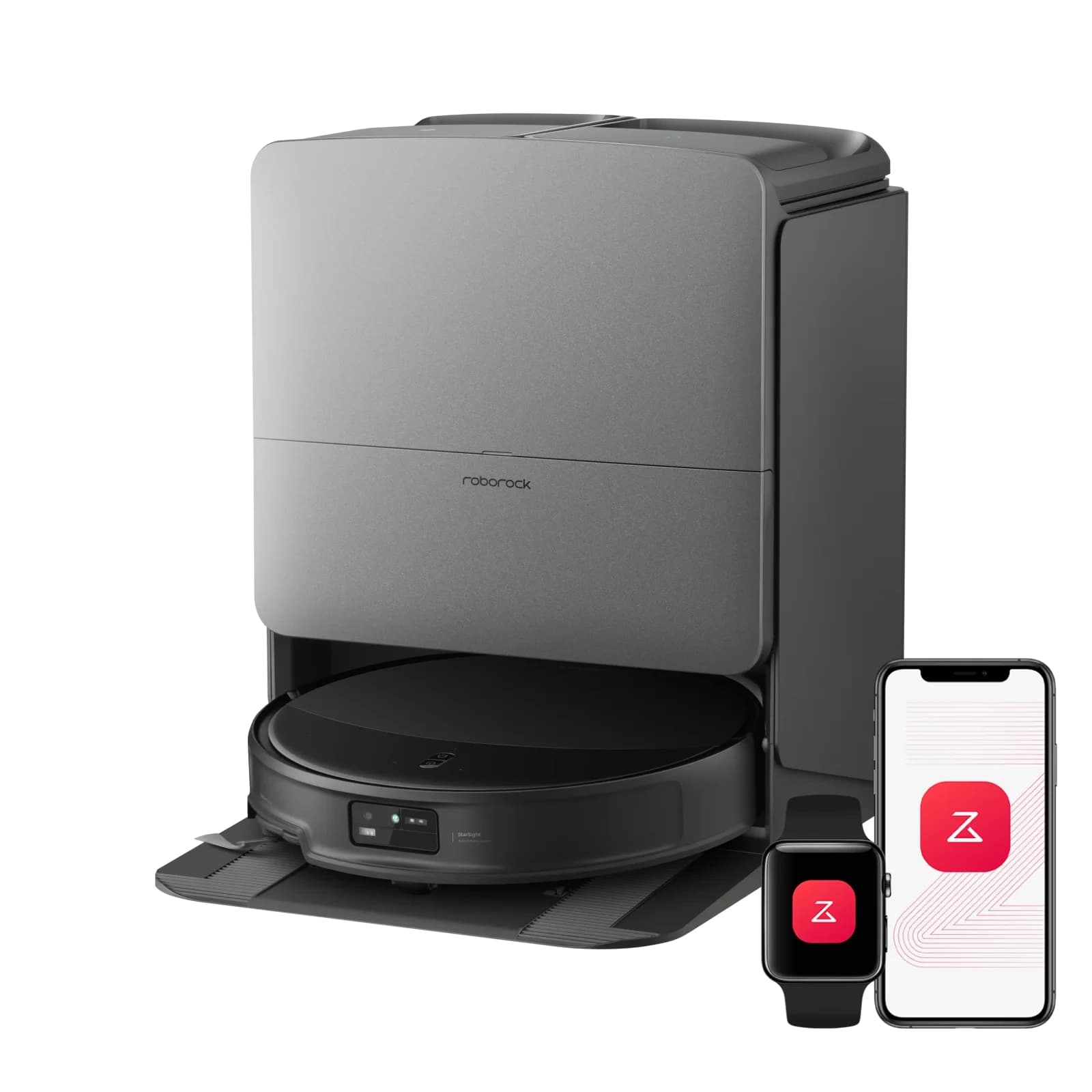
Roborock Saros 20
Roborock's flagship: 36,000 Pa, twin spinning mops the dock washes at 100 °C, and a solid-state 3D sensor instead of a LiDAR turret.
Robot vacuums for 5 cm thresholds (50 and 52 mm)
Six machines publish 50 mm or more, and 52 mm is the highest single step any maker in our catalogue states. The Dreame X60 Pro Ultra Complete, the Dreame X60 Pro Master and the Dreame X60 Pro Ultra Matrix, the same robot with a plumbed dock on the Master and a pad-changing dock on the Matrix, publish 52 mm and are the only three with a margin over a 5 cm sill. The Dreame Aqua20 Pro Ultra Roller X Complete, the MOVA V70 Ultra Complete and the V70 Ultra Complete X publish 50 mm, exactly the height of the sill.
Among the machines that mop with a roller, the Aqua20 Pro Ultra Roller X Complete climbs highest at 50 mm, and the MOVA Z60 Ultra Roller Complete is second at 48 mm.
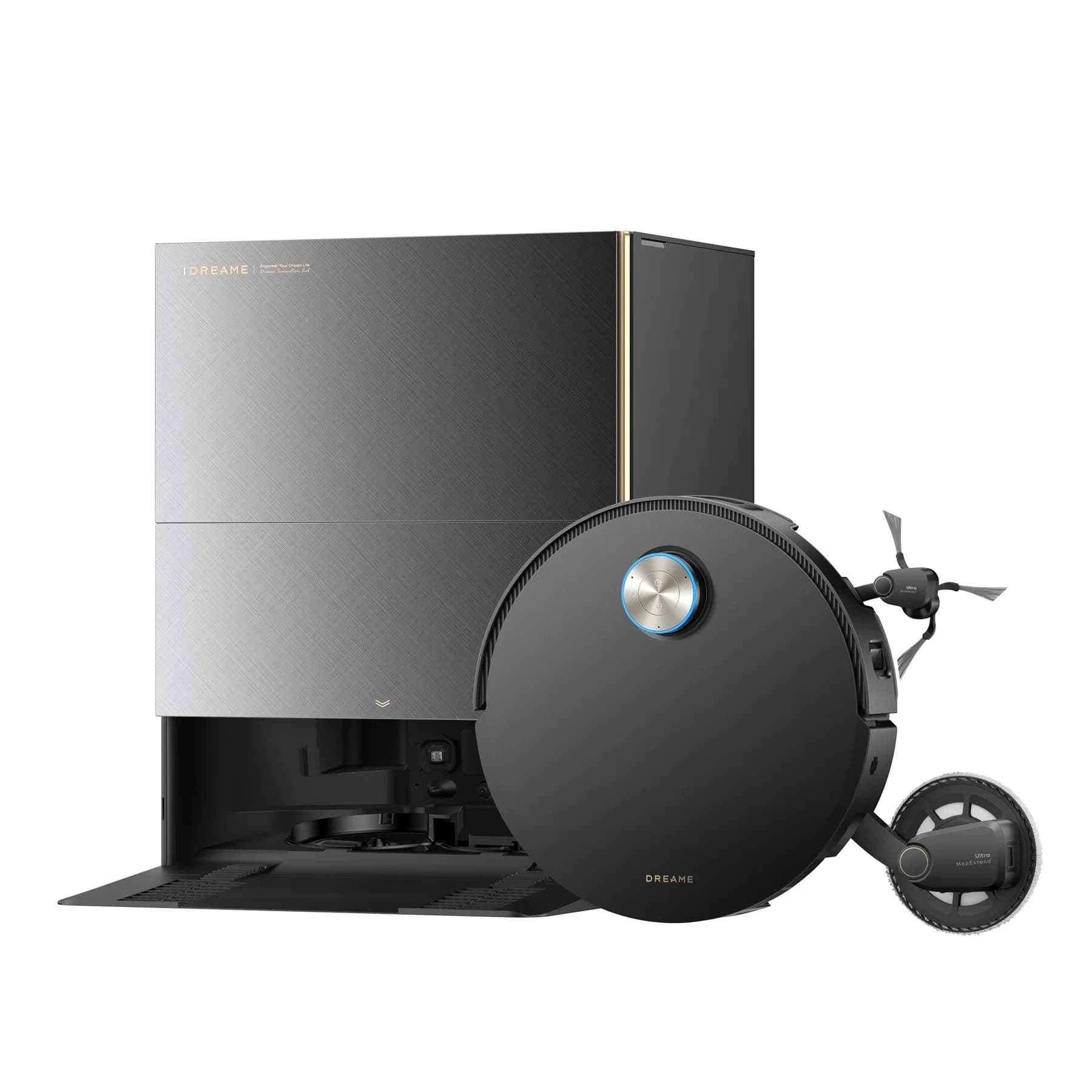
Dreame X60 Pro Ultra Complete
Dreame's top vacuum: 42,000 Pa, a turret that retracts to 89 mm, legs for a 5.2 cm sill or 10 cm double step, a mop pad that reaches 18 cm out and detaches on deep carpet, and a 100 °C wash.
Double steps up to 10 cm: what the second number means
Beside the single step, many product pages print a second, larger number: the double step, which has a row of its own in our specification tables. It means two edges in a row, the machine climbing onto the first and from there onto the second. It is not the height of one sill. Roborock spells the sum out for the Saros 20 Sonic: 4.5 cm plus 4.3 cm, 8.8 cm in all. At a single edge it remains a 4.5 cm machine.
A double-step figure is published for 39 machines in our catalogue:
- 10 cm: Dreame X60 Pro Ultra Complete, X60 Pro Master, X60 Pro Ultra Matrix and Aqua20 Pro Ultra Roller X Complete.
- 9 cm: MOVA V70 Ultra Complete, V70 Ultra Complete X and Z70 Ultra Roller Complete.
- 8.8 cm: Roborock Saros 20 Sonic, Saros 20 Flow and Qrevo Edge 3 Pro; Dreame X60 Ultra, X60 Max Ultra Complete and L60 Pro Ultra.
- 8.79 cm: Roborock Saros 20 Neo.
- 8 cm: Dreame Matrix10 Ultra and Aqua10 Ultra Roller Complete; MOVA Z60 Ultra Roller Complete.
- 6 cm: Dreame X50 Ultra, X50 Master, L50 Ultra, Aqua10 Roller and Aqua10 Ultra Track Complete; MOVA V50 Ultra Complete and V70 Ultra Pure.
- 4.9 cm: Ecovacs DEEBOT T90S PRO OMNI.
- 4 cm: Roborock Qrevo Curv 2 Pro and Qrevo CurvX; Dreame Matrix10 Pro, L60 Ultra, L60 Ultra PE, L50 Pro Ultra, L50s Pro Ultra, L50 Ultra AE, L40s Pro Ultra, L40s Ultra and Aqua10 Roller AE; MOVA S70 Ultra Roller; Ecovacs DEEBOT T90 PRO OMNI and DEEBOT X12 OmniCyclone.
Five of them publish only the double step and no single-step height: the Saros 20 Flow, the Qrevo Curv 2 Pro, the Qrevo CurvX, the L60 Pro Ultra and the Z70 Ultra Roller Complete. That is why they are missing from the sections above. The MOVA Mobius 60 is said by its maker to cross obstacles up to 8 cm high, with no word on whether that means one edge or two, so it is in neither list. And a 4 cm double step does not make a 4 cm climber: MOVA gives the S70 Ultra Roller's as 3 cm plus 1 cm, and on Dreame's L50 Pro Ultra, L40s Pro Ultra and L40s Ultra the two edges must be more than 3 cm apart; at a single step Dreame rates all three for 22 mm.
What the figure leaves out
- A rug is not a sill. A thick rug edge is soft and the wheels sink into it; the published height is for a hard step. Most machines cross a 2 cm rug regardless of what they publish.
- Height under furniture is a different question. A 120 mm Aqua10 Roller clears the same 42 mm as an 89 mm X50 Ultra; which fits under your sofa is a second measurement.
- The mop. A machine that lifts its chassis still carries its mop over the step. On the models that leave the mop at the dock before carpet, that is not an issue; on the rest the pad is lifted, by 7 to 21 mm depending on the model.
- No figure is not zero. Roughly four in ten machines we list publish no single-step height at all. Their product pages say "not published" rather than a guess.
How do I measure my threshold?
Measure the hard edge, from the floor the robot stands on to the top of the sill, and measure it in millimetres: the makers' figures are in places only 2 mm apart, and a tape read to the half centimetre cannot tell a 20 mm sill from a 22 mm one. Measure from both sides, because the floors on either side of a door often lie at different heights, and take the higher reading. If a second edge follows the first, a rail in front of the sill or a raised floor behind it, measure each edge and the two together: that is the double-step case, and the second number is the one to compare.
What if the threshold is higher than the maker's figure?
Then the machine is not rated for it, and a millimetre over is over: the figure is a ceiling, not a working value. The usual answer is to take the edge away. A threshold ramp laid against the sill, or a flat transition strip in its place, turns the step into a slope. The makers publish no figures for ramps, so we print none of our own. Where neither is possible, the robot's area ends at that sill, and the rooms beyond it need a second machine or someone to carry this one across.
What we would buy
For a 5 cm sill, six machines publish 50 mm or more, and only the three X60 Pro models leave a margin. For sills of 3 to 4 cm, the 19 machines from 40 to 48 mm and the six above them all qualify, so the choice falls to other things: our Saros 20 against X60 Pro Ultra Complete comparison is exactly that decision. For an ordinary flat with 2 cm sills, almost anything with a full dock will do, and the best value ranking is the place to start. The ranking for high door thresholds orders the machines rated for 30 mm or more by that height. How we score explains where the threshold figure enters the arithmetic.
More articles
- Robot vacuums that mop, and your rugs: lift the mop, leave it at the dock, or steer round the carpet
16 min read
- Robot vacuums without a camera: what the cameras see, where the pictures go, and how to buy without one
12 min read
- Black Friday 2026 robot vacuums: how to tell a real discount from a permanent one
6 min read