Robot vacuums that mop, and your rugs: lift the mop, leave it at the dock, or steer round the carpet
Lift the mop, leave it at the dock or steer round the rug: what each robot vacuum we list does at a carpet edge, and what the makers' millimetres measure.
Maciej Ziółko · RoboVerdict editorial · Published · 16 min read
Short answer: four ways to keep a wet mop off a rug
Hard floors to mop and rugs that must stay dry: what matters in a robot vacuum that mops is what it does at the edge of the carpet. Every one of the 111 robot vacuums we list has a mop, and there are four answers. The robot lifts the mop and crosses with it raised. It leaves the mop at the dock and vacuums the carpet dry. It steers round the rug, by a setting or a no-mop zone in the app. Or the owner takes the pad off before a run that crosses carpet.
Counted across our catalogue, 95 of the 111 machines lift the mop, 65 of them by a stated number of millimetres and 30 without one. On 28 machines the mops stay at the dock before a carpet run, and 25 of those can lift them as well, for low pile. Eleven static-pad machines and two rollers state neither, and rely on the last two answers. And the 28 machines that mop with a roller only ever lift it: no roller machine we list leaves its roller behind.
The short version: for a few low-pile rugs, a stated lift is what the makers design for; for thick or high-pile carpet, the makers that build both mechanisms leave the mops behind. Dreame says so outright for the X60 Max Ultra Complete: on low-pile carpet the chassis and the mop pads lift for dry vacuuming, on high-pile carpet the mops are detached automatically so that the carpet stays dry.
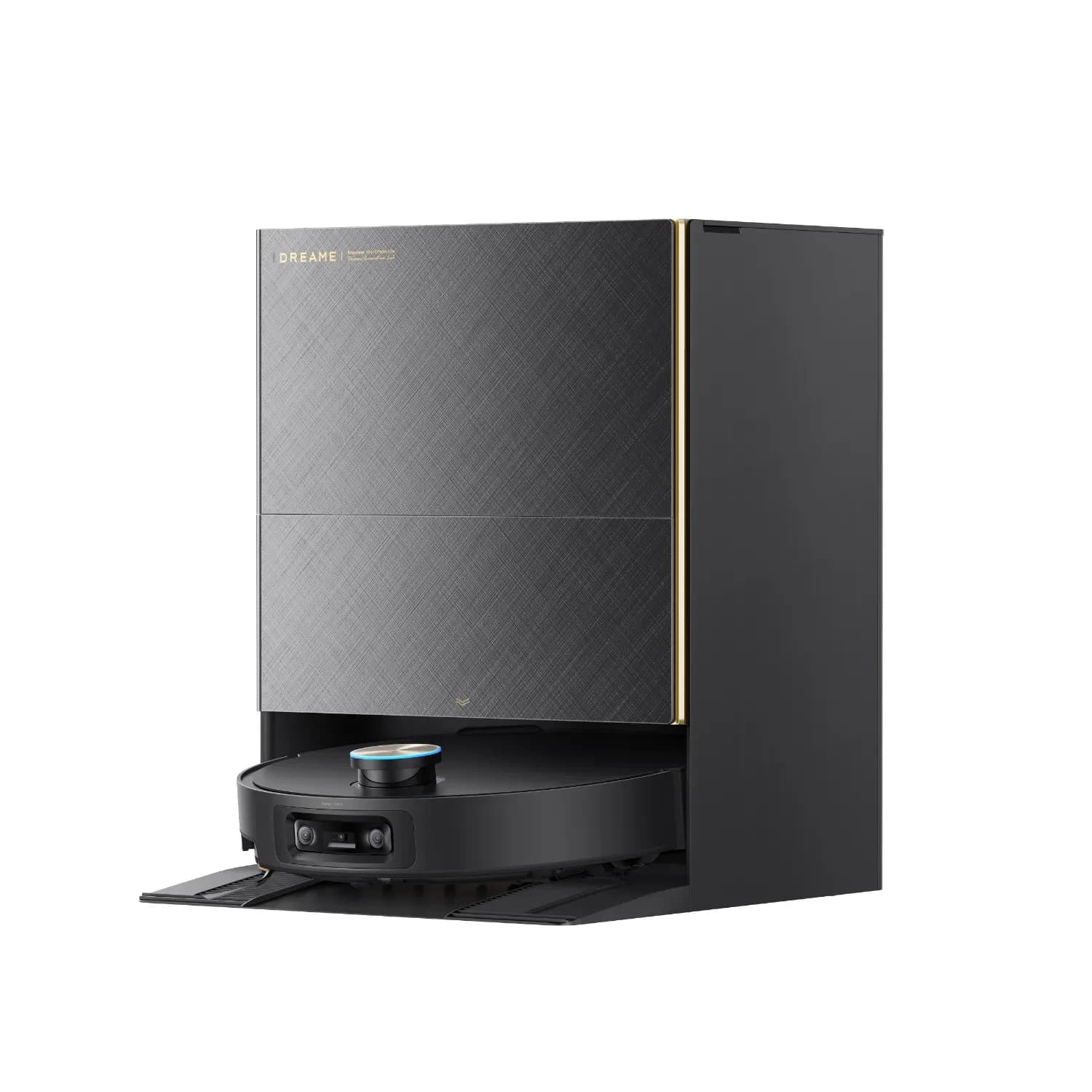
Dreame X60 Max Ultra Complete
Dreame's American flagship: 35,000 Pa, 4.5 cm sills and 8.8 cm double steps, a LiDAR that drops to 79.5 mm, pads that extend, detach and run 40 °C water, an 80-minute charge and a 100 °C wash.
Side by side, the Narwal Freo Z10 Pro lifts its mops 12 mm and the MOVA P50 Pro Ultra leaves them at the dock; our comparison of the two weighs the rest. The flat pad of the Dreame D20 Pro Plus does neither. How each kind of mop works is the subject of our guide to roller mops and spinning pads, and every machine named below has its page in the robot vacuum category.
What the millimetre figure measures, and what it does not
The 65 stated lifts run from 7 to 21.5 mm. In the whole millimetres our catalogue stores, they fall at 7 mm (2 machines), 10 mm (35), 11 mm (1), 12 mm (10), 13 mm (1), 14 mm (5), 15 mm (7), 17 mm (2) and 21 mm (2). That puts 37 of the 65 at 10.5 mm or less and 11 at 15 mm or more. The figure that recurs, 10 mm, covers 22 Dreame and 10 MOVA machines and three from other makers that state a round 10 mm: the Ecovacs DEEBOT X11 PRO OMNI, the Narwal Flow 2 and the Roborock Qrevo S5V. For Dreame and MOVA models such as the L50 Ultra and the V70 Ultra Complete, the makers print 10.5 mm.
At the ends of the scale, the Dreame L10s Pro Gen 2 and L10s Pro Gen 3 state 7 mm. The Dreame X60 Pro Ultra Complete and the X60 Pro Master, the same robot on a plumbed dock, state 21.5 mm. Next below them, at 17 mm, stand the Roborock Qrevo CurvX and the Dreame Aqua10 Ultra Track Complete.
Those numbers do not measure the same thing, which is the main reason not to rank machines by them alone. Dreame defines the 14 mm of the Aqua10 Roller AE as the robot's height difference before and after the mop lifts. For the X60 Pro Ultra Complete it defines 21.5 mm, the figure in the carpet row of our specification table for that machine, as the gap between the floor and the mop with the chassis and the mop both lifted. Our product pages record the 17 mm of the Qrevo CurvX and of the Aqua10 Ultra Track Complete as lifts with the chassis or the body too. A pad-only lift and a lift that includes the chassis cannot be set against each other millimetre for millimetre.
Nor is the lift a carpet rating. The makers publish their carpet advice separately, and only their own words give a pile height. Dreame advises leaving out carpets with pile over 3 mm while the pads of the L10s Pro Gen 2 are fitted, and suggests no-mop zones or removing the pads above 3 mm of pile for the L10s Pro Gen 3. Its claim of 0% carpet wetting for the Aqua10 Roller AE rests, in Dreame's own footnote, on in-house testing on carpets no thicker than 12 mm. Narwal, on its help page for the Freo Z10, recommends Carpet Mode for carpets under 20 mm thick with a pile of 0.7 cm or less. eufy advises no-go zones for carpets thicker than 26 mm on the Omni E25 and E28, and names carpets under 26 mm of combined thickness and pile for the Omni C30 Edge.
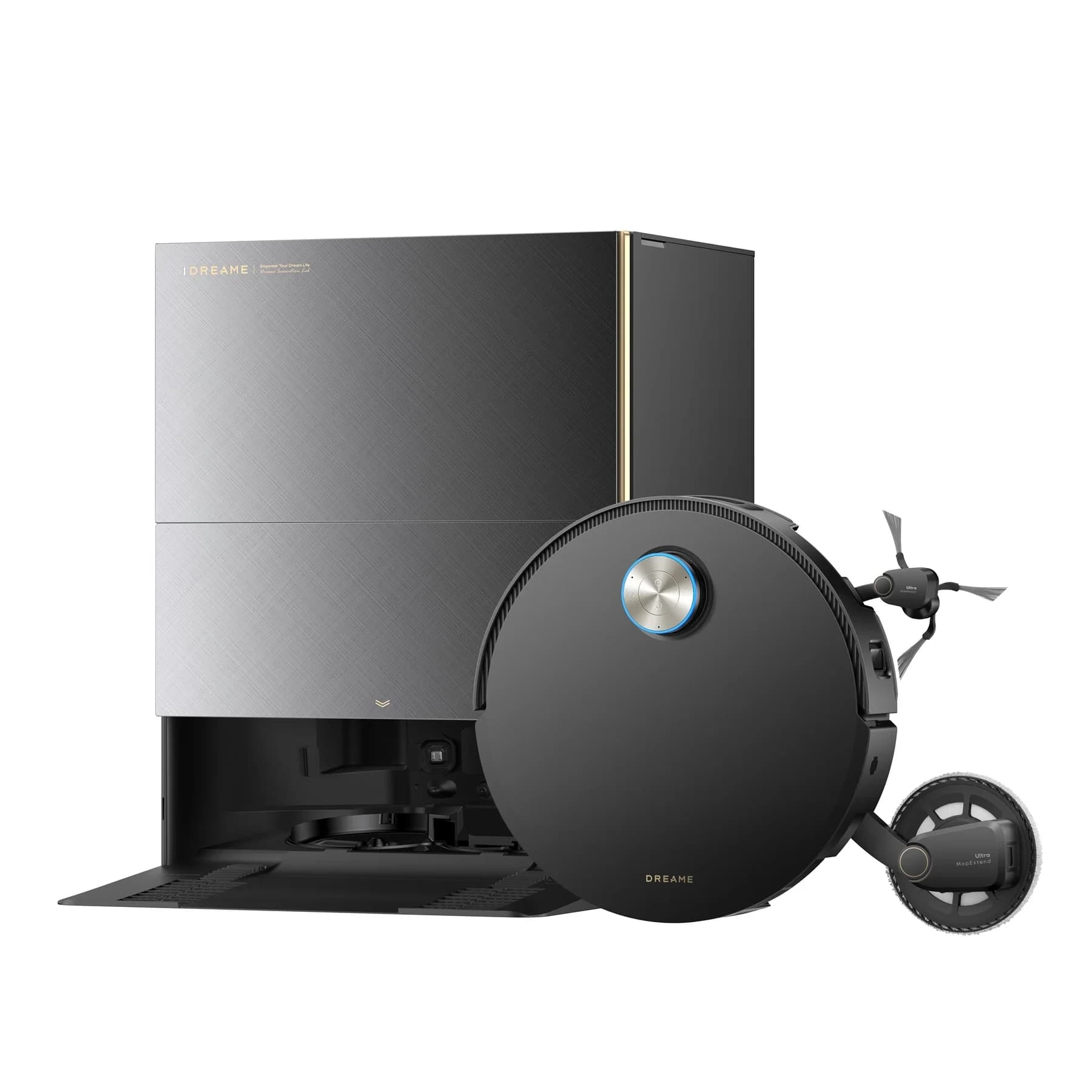
Dreame X60 Pro Ultra Complete
Dreame's top vacuum: 42,000 Pa, a turret that retracts to 89 mm, legs for a 5.2 cm sill or 10 cm double step, a mop pad that reaches 18 cm out and detaches on deep carpet, and a 100 °C wash.
The figure, then, describes one mechanism in one maker's terms; the carpet advice is the limit. Within one range it still helps: our comparison of the X60 Pro Ultra Complete and the X60 Ultra sets a stated 21.5 mm, with pads that also detach, against a lift Dreame gives no height for.
A lift without a number
The mop lifts without a stated figure on 30 machines: 19 Roborock, 4 MOVA, 3 Dreame, 3 eufy and one Ecovacs. Dreame's three are the L40 Ultra CE, the X60 Max Ultra Complete and the X60 Ultra. The three from eufy are rollers: the Omni C28, Omni E25 and Omni E28. The one from Ecovacs is a roller too: the DEEBOT T90 MAX OMNI, whose lift Ecovacs gives as 15 mm on its pages and 12 mm in its French specification list, so we record no figure. MOVA's four are the P50 Ultra, whose two spinning pads lift with no height given, and three that mop with a vibrating pad: the S10, S10 Plus and S20 Ultra. All eight vibrating-pad machines we list lift their pad, and none of them states by how much.
Roborock prints a millimetre figure for 4 of the 30 Roborock machines we list: 10 mm for the Qrevo S5V, 15 mm for the Qrevo Curv 2 Flow and the Qrevo Edge 2 Flow, and 17 mm for the Qrevo CurvX. That counts Roborock's spec sheets, not the height of its mops: a lift without a number is simply one that cannot be compared.
With no height to go on, follow the maker's carpet advice and the modes in its app. eufy's FAQ for the Omni E25 and E28: on short pile, use Vacuum Only, which raises the mopping module; on medium and long pile, use Carpet Avoidance. Roborock's Qrevo S Pro has a carpet sensor underneath and retracts its mop mounts on carpet, carpets can be set as no-go zones, and Roborock says it is not meant for high-pile carpet. At the lower end, our comparison of the MOVA E40 Ultra and the Roborock QV 35A sets a stated 10.5 mm against a lift with no figure, and the budget ranking lists the machines under its price cap.
Leaving the mops at the dock
Leaving the mops behind is the answer of 28 machines: 15 Dreame, 7 MOVA and 6 Roborock. Of these, 26 mop with two spinning pads and two with a vibrating pad, Roborock's Saros 10 and Saros 20 Sonic. On 25 of the 28 the pads can also lift, which covers low pile without a trip back to the dock. Three only detach: the Roborock Saros 20, the Roborock Qrevo 2 Pro and the MOVA P50 Pro Ultra. Our guide to roller mops and spinning pads names all 28; here is how the makers describe the move.
Roborock removes the mops of the Qrevo Curv 2 Pro in its vacuum-only and carpet-first modes, and for it and the Qrevo 2 Pro says these carpet settings must be enabled by hand in the app, so check the app before the first run over a rug. For the Saros 20 it states carpet cleaning for a pile of up to 3 cm, with the mop detached and the chassis lifted.
Dreame splits the job by pile height, as on the X60 Max Ultra Complete above; the L50 Ultra lifts its mops for short pile and removes them for long-pile rugs, which Dreame's page places in the bedroom. MOVA hands the choice to a sensor: on the V70 Ultra Complete, an ultrasonic sensor tells pile heights and textures apart, and the robot then lifts or removes the mop, avoids the rug or boosts suction.
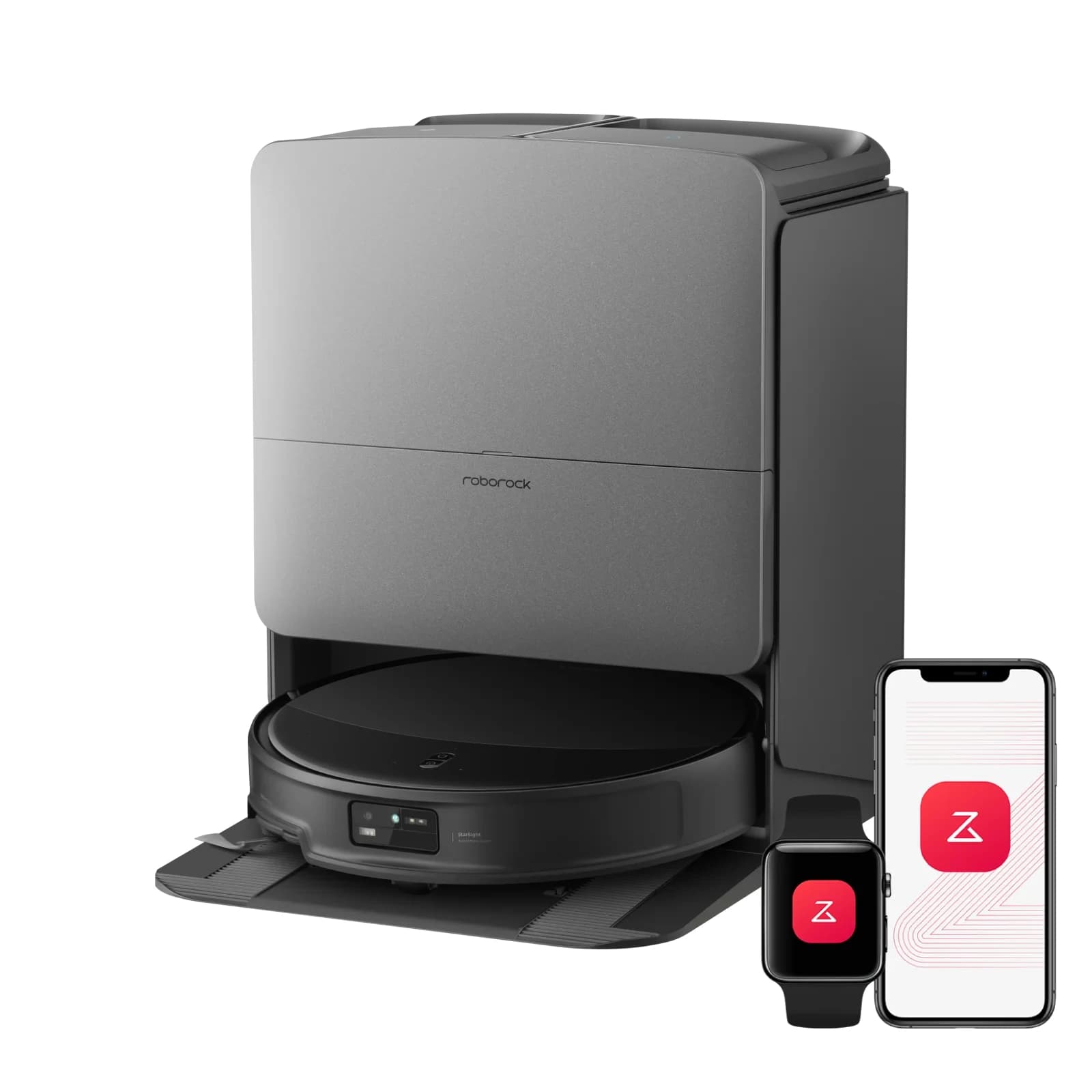
Roborock Saros 20
Roborock's flagship: 36,000 Pa, twin spinning mops the dock washes at 100 °C, and a solid-state 3D sensor instead of a LiDAR turret.
A detached mop is the only answer that keeps every wet surface off the carpet. The price is a trip to the dock: as our Saros 20 page describes it, the robot leaves the mop module there before the carpet and collects it afterwards. Our comparisons of the Saros 20 and the X60 Pro Ultra Complete and of the Saros 20 and the Saros 20 Sonic weigh those choices, and our guide to robot vacuum docks covers what the dock does with the pads meanwhile.
Roller mops: a lift and a guard, never a detach
Of the 28 roller machines we list, none leaves its roller at the dock. A lift between 10 and 17 mm is stated for 22 of them, and eufy's Omni C28, E25 and E28 and Ecovacs' DEEBOT T90 MAX OMNI lift theirs without a figure. The highest stated roller lift is 17 mm, on the Dreame Aqua10 Ultra Track Complete. Seven machines state 15 mm: the Dreame Aqua20 Pro Ultra Roller X Complete, four from Ecovacs, the DEEBOT T90 PRO OMNI, T90 MAX PRO OMNI, T90S PRO OMNI and X12 OmniCyclone, and Roborock's Qrevo Edge 2 Flow and Qrevo Curv 2 Flow. Rollers therefore account for 8 of the 11 machines that state 15 mm or more.
A lifted roller is still wet and passes right over the pile, so the makers add a guard. Dreame's AutoSeal covers the roller on carpet on the Aqua10 Roller AE, the Aqua10 Roller and the Aqua20 Pro Ultra Roller X Complete. MOVA calls its guard AutoShield and fits it to the Z60 Ultra Roller Complete, Z70 Ultra Roller Complete, S70 Ultra Roller and S70 Pro Roller; on the Z60 it is a barrier over the lifted roller, and the whole body lifts to cross a rug. Roborock's Qrevo Edge 2 Flow raises its roller 15 mm and closes a flap over it. Ecovacs drops a cover over the roller as it lifts 15 mm, on the DEEBOT X12 OmniCyclone and, by Ecovacs' own page, on the T90S PRO OMNI.
Narwal goes another way on the Flow 2: the mop lifts 10 mm, and a pressure plate seals the brush inlet against the carpet for 4.2 times the suction, by Narwal's own measure.
Hence the trade-off: a pad machine can leave its pads behind and a roller machine cannot, so on deep carpet the roller relies on a lift of a centimetre or so and a guard. The eufy Omni E35, by its product page, lifts its roller 11 mm and keeps it dry while suction goes to maximum. With hard floors and a few rugs that is enough within the makers' own limits; for wall-to-wall carpet, the pad machines that leave their mops at the dock are the safer choice. The roller mop ranking orders the rollers, and our comparisons of the Aqua10 Roller and the Qrevo Edge 2 Flow and of the Aqua10 Roller and the Z60 Ultra Roller Complete set AutoSeal against a flap and against AutoShield.
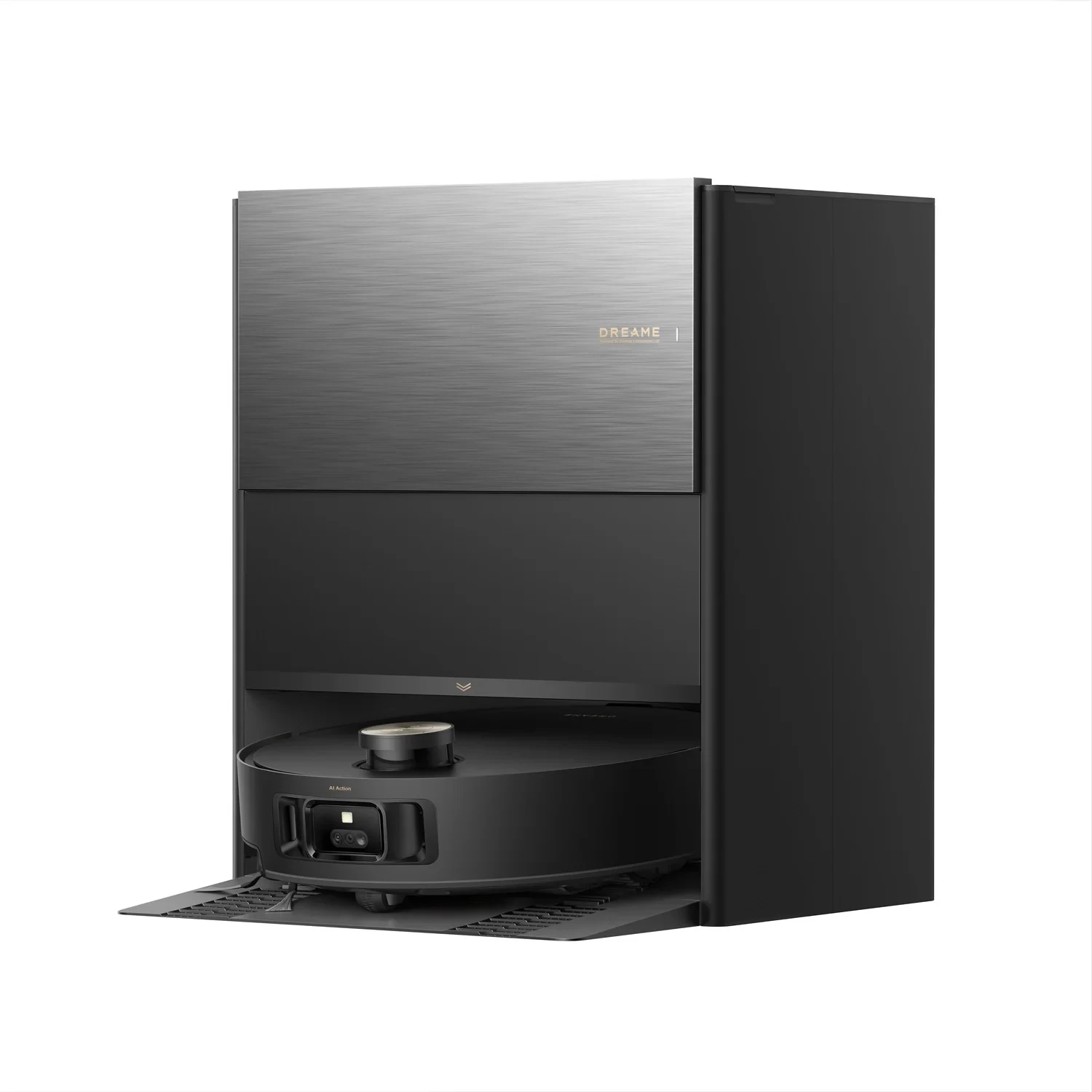
Dreame Aqua10 Roller
Roller mop and legs without the retracting turret: 30,000 Pa with a carpet boost, a roller at 9 to 11 N that lifts 14 mm under a guard, a 4.2 cm sill or 6 cm double step, 120 mm tall, a 100 °C wash.
Machines that lift nothing
Eleven machines we list mop with a static pad that neither lifts nor stays at the dock: the Dreame D20, D20 Plus, D20 Air Plus, D20 Pro, D20 Pro Plus and D10 Plus Gen 2, the Roborock Q7 M5, Q7 M5+, Q7 L5 and Q7 L5+, and the Narwal Freo S. Two rollers publish no lift either, the Narwal Freo 20 and the Roborock Saros 20 Flow. Of those eleven static pads, 8 still claim a suction boost on carpet, and none has a dock that washes the pad.
Not every static pad stays down: Roborock's Q10 X5 and Q10 X5+ lift theirs, the X5+ when a carpet sensor finds a rug, though Roborock gives no height.
Owners of a machine that lifts nothing have three options. Draw a no-mop zone over the rugs: our D20 Pro Plus page says rugs need one, and for the Q7 M5+ we advise a no-go zone over rugs when it mops. Let the robot avoid carpet, where the app offers that. Or take the pad off before the run, as Dreame itself suggests above 3 mm of pile even for the L10s Pro Gen 3, which lifts its mops 7 mm. In a home with a rug in every room the pad is a small part of the job, and the budget ranking weights cleaning well above mopping.
How the robot knows it is on carpet, and what it does there
Lifting or leaving the mop starts with finding the carpet, and the makers name three ways. Ultrasound: Dreame on the D20 Pro, MOVA on the E40 Ultra and the V70 Ultra Complete, and Narwal on its help page for the Freo Z10. A line laser at the front: the eufy Omni C30 Edge spots carpet edges before it reaches them and lifts its mop 12 mm. A sensor underneath: Roborock's Qrevo S Pro. What follows is often a setting, not a default: by Narwal's help page for the Freo Z10, the robot avoids carpet until Carpet Mode is switched on.
Once on carpet, 59 of the 111 machines claim a suction boost and 52 do not. A missing claim does not make a machine weak on carpet; it means the maker did not say. That is the case of Roborock's QV 35A: it runs carpet strategies chosen in the app and turns its main brush 10% faster at maximum power, but Roborock states no suction boost for it. The claims differ in kind as well: the Narwal Freo Z10 Ultra raises suction on carpet by 160%; Roborock's Qrevo S offers a boost, a second pass, or vacuuming the carpets first with the mop dry; and the Qrevo Curv S5X adds Carpet Boost+, a boosted pass in a cross pattern.
A chassis lift is a different thing from a mop lift, though the two often come together. Roborock's AdaptiLift raises the Qrevo Curv 2 Pro 20 mm for carpet up to 3 cm deep, and the Qrevo Edge lifts its chassis up to 10 mm. MOVA's Z60 Ultra Roller Complete lifts its whole body to cross a rug. The same legs and arms climb door sills, which our guide to robot vacuums and door thresholds covers.
Dreame adds a tip on its German page for the X60 Pro Ultra Complete: mark fringed rugs in the app so the robot goes round them. The carpet ranking admits only machines from 8,000 Pa and weights cleaning above everything else, mopping included.
Which to look at for your floors
- Mostly hard floor and a few low-pile rugs: a lift with a stated figure, and a suction boost on carpet. The Narwal Freo Z10 Pro lifts 12 mm, the MOVA E40 Ultra 10.5 mm at the lower end of the range, and the Roborock Qrevo CurvX 17 mm.
- Thick or high-pile rugs in more than a room or two: a machine that leaves the mops at the dock. The Roborock Saros 20, for pile up to 3 cm by Roborock's figure, the Roborock Qrevo Curv 2 Pro, the Dreame X60 Pro Ultra Complete, which lifts 21.5 mm and detaches, and the MOVA V70 Ultra Complete.
- A roller mop and rugs: the higher stated lifts with a guard. The Dreame Aqua20 Pro Ultra Roller X Complete at 15 mm with its AutoSeal cover, the Ecovacs DEEBOT X12 OmniCyclone at 15 mm with a cover, the Roborock Qrevo Edge 2 Flow at 15 mm with a flap, and the MOVA Z60 Ultra Roller Complete at 14 mm with AutoShield.
- A tight budget and a static pad: plan the no-mop zones before the first run, as on the Dreame D20 Pro Plus, or pick a static pad that lifts, the Roborock Q10 X5+.
The mopping ranking lists only machines whose dock washes the mop; the carpet ranking, the roller mop ranking and the budget ranking take the other angles.
Every figure above is the manufacturer's published specification, cited on the product page it links to, and every pile height is a maker's own statement about the model it names. Nothing here comes from our own trials of the machines; how we score sets out the arithmetic.
Sources, all read on 21 October 2026: Dreame's pages for the Aqua10 Roller AE, the X60 Pro Ultra Complete (in German), the X60 Max Ultra Complete and the L50 Ultra; Roborock's pages for the Saros 20 in German and American editions, the Qrevo Curv 2 Pro, the Qrevo 2 Pro and the Qrevo Edge 2 Flow (in German); Ecovacs' page for the DEEBOT T90S PRO OMNI; MOVA's German pages for the Z60 Ultra Roller Complete and the V70 Ultra Complete; Narwal's help page for the Freo Z10 and its page for the Flow 2; eufy's pages for the Omni E25 and E28 and the Omni C30 Edge. The counts are the makers' specifications in our catalogue of 111 robot vacuums on 21 October 2026.