Roller mop or spinning pads: which robot vacuum mop is better?
The four ways a robot vacuum mops, what each does on carpet and at the skirting, which machines use which, and how our mopping subscore treats them.
Maciej Ziółko · RoboVerdict editorial · Published · Updated October 25, 2026 · 5 min read
Four ways a robot mops
Every robot vacuum that mops does it one of four ways, and the way decides more than the suction figure does. A static pad is a damp cloth dragged behind the machine with no pressure and no movement of its own. A vibrating pad, which Roborock calls sonic, oscillates against the floor. Two spinning pads press and rotate, and on most current machines one of them extends sideways to reach the skirting. A roller turns against the floor while the dock, or the machine itself, feeds it clean water on one side and scrapes it on the other, so the surface touching the floor is renewed as it turns.
In our catalogue the split is lopsided: 64 of 114 machines use two spinning pads, 29 a roller, 8 a vibrating pad and 13 a static one. The roller is the newest of the four and the one every maker launched a version of in 2025 and 2026.
Spinning pads: pressure and reach
The pad machines split on what they do at carpet. Most lift the pads, by a published 7 to 21 mm: 10 mm on most Dreame and MOVA models, 12 mm on Narwal's Freo Z10 line, 17 mm on the Roborock Qrevo CurvX and 21 mm on the Dreame X60 Pro Ultra Complete. A smaller group leaves the pads at the dock before a carpet run and crosses with nothing damp attached: Roborock's Saros 20, Saros 20 Sonic, Saros 10, Saros Z70, Qrevo Curv 2 Pro and Qrevo 2 Pro; Dreame's X60 Pro and Max models, X50 Ultra and X50 Master, X40 Ultra, both Matrix10, L60 Pro Ultra, L60 Ultra FE, L50 Pro Ultra, L50 Ultra, L40s Pro Ultra and L40s Ultra; and MOVA's V50 Ultra Complete, V70 Ultra Complete, V70 Ultra Complete X and V70 Ultra Pure, P50 Pro Ultra, P70 Pro Ultra and Mobius 60. For a home that is half carpet, that second group is the one to shop from.
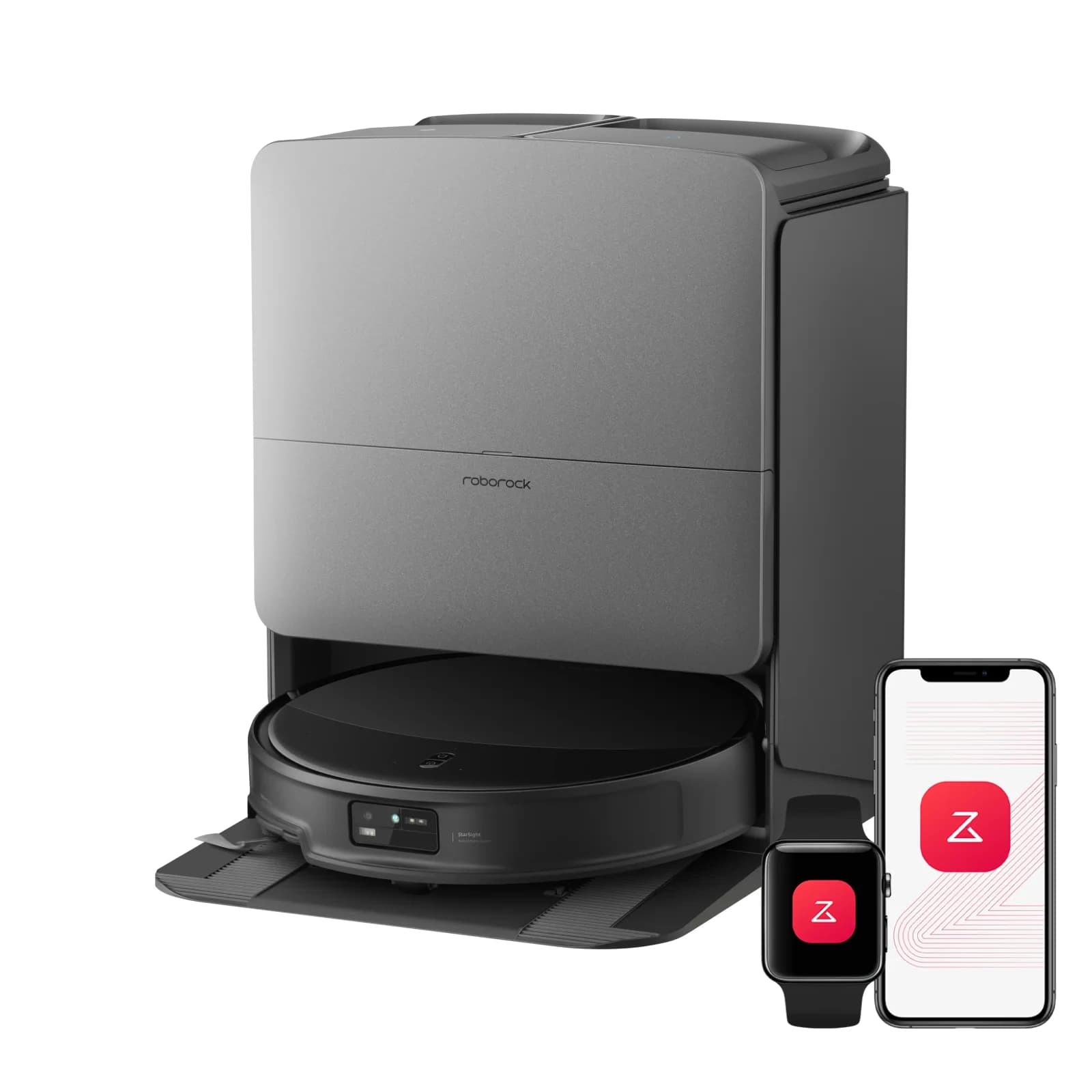
Roborock Saros 20
Roborock's flagship: 36,000 Pa, twin spinning mops the dock washes at 100 °C, and a solid-state 3D sensor instead of a LiDAR turret.
Roller: a surface that stays clean
A pad carries whatever it picked up until the next wash at the dock. A roller does not, which is the whole argument for it, and why the roller machines with a lift and an extending arm score highest on our mopping subscore. The Dreame Aqua10 Roller, Aqua10 Ultra Roller Complete and Aqua10 Roller AE lift 14 mm and extend, as do the MOVA Z60 Ultra Roller Complete and the Z70 Ultra Roller Complete at 13 mm; the MOVA S70 Ultra Roller lifts 12 mm, the Ecovacs DEEBOT X11 PRO OMNI, DEEBOT T80S OMNI and Narwal Flow 2 10 mm. Roborock's Qrevo Edge 2 Flow and Qrevo Curv 2 Flow lift 15 mm but do not extend. Of eufy's roller machines, the Omni E35 lifts its roller 11 mm and extends it 32 mm, while the Omni E28, Omni E25 and Omni C28 publish a lift without a figure and no extension.
The roller's limit is carpet: no roller machine in our catalogue leaves it at the dock, so crossing carpet means a roller lifted a centimetre or so above the pile, and the Saros 20 Flow and Narwal's Freo 20 publish no lift at all. On thick carpet that is closer than a detached pad. Which machines lift the mop, by how much, and which leave it at the dock is set out in what a mopping robot does at the edge of a rug.
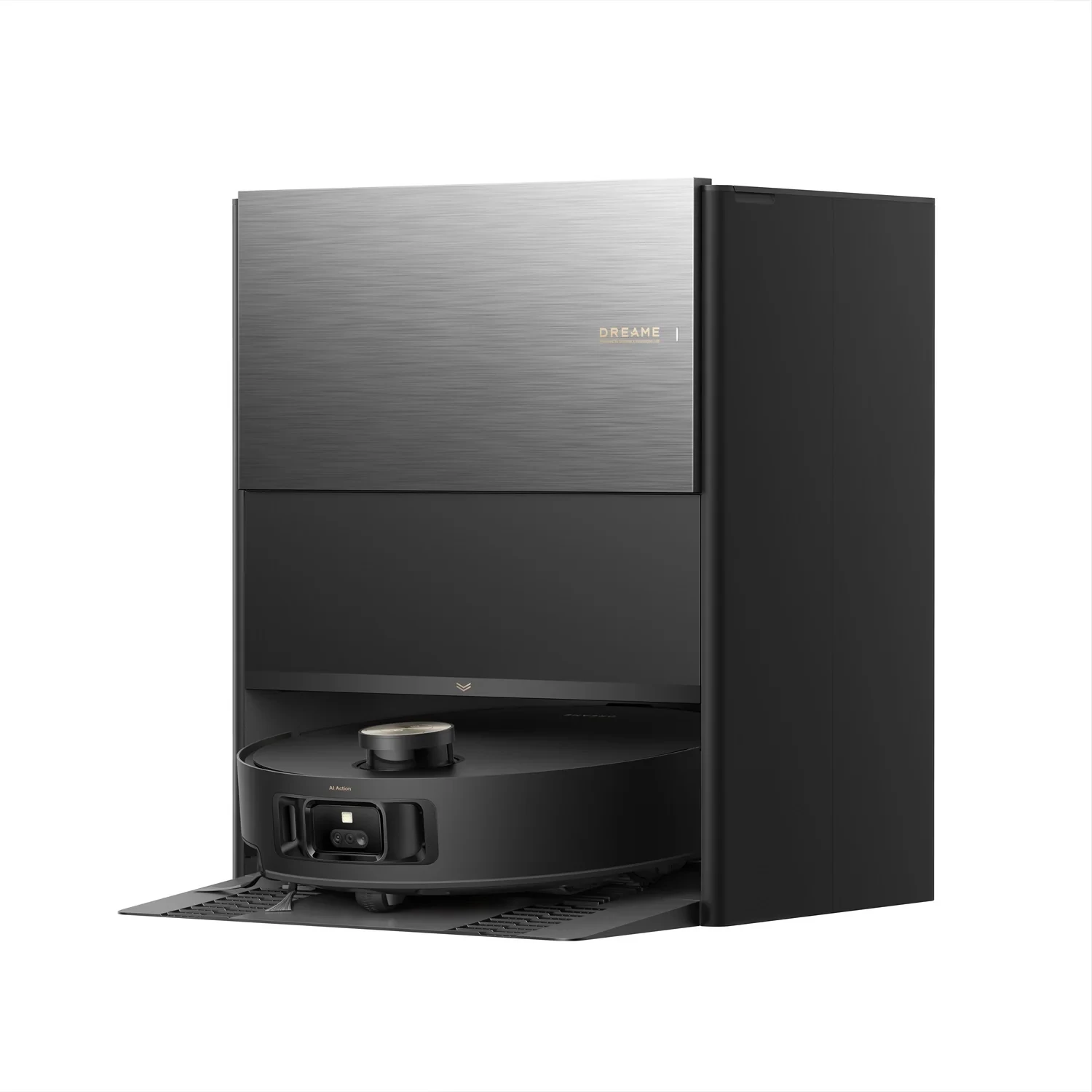
Dreame Aqua10 Roller
Roller mop and legs without the retracting turret: 30,000 Pa with a carpet boost, a roller at 9 to 11 N that lifts 14 mm under a guard, a 4.2 cm sill or 6 cm double step, 120 mm tall, a 100 °C wash.
Vibrating and static pads
The Roborock Saros 20 Sonic is the one current flagship on a vibrating pad; it shares a chassis with the Saros 20, and our Saros 20 against Saros 20 Sonic comparison is the two mop systems on otherwise equal terms. The S8 MaxV Ultra, Saros 10, Q10 S5+, Q10 S5, MOVA S20 Ultra, S10 and S10 Plus are the others. Static pads survive only at the bottom of the range: the Roborock Q7 M5, Q7 M5+, Q7 L5, Q7 L5+, Q10 X5 and Q10 X5+, the Dreame D20, D20 Plus, D20 Air Plus, D20 Pro, D20 Pro Plus and D10 Plus Gen 2, and the Narwal Freo S. They wipe; they do not mop.
How the engine scores it
Our mopping subscore rewards the mechanism, the lift or detach, the extension and the dock's washing and drying, in that order. Roller machines with a lift and extension score up to 97, the best spinning-pad machines 92, vibrating pads between 52 and 80, static pads between 20 and 40. The Verdict Score then weighs mopping against seven other things, which is why the Aqua10 Roller and the Saros 20 score close together with different mops. The mopping ranking puts the weight on the mop; the carpet ranking on what happens when the mop has to get out of the way. The roller mop ranking lists only the machines that mop with a roller.
Which to choose
- Mostly hard floors and a kitchen that gets dirty: a roller with an extending arm. The Aqua10 Roller and the Z60 Ultra Roller Complete are the two we would shortlist, and our comparison of the two settles it by threshold and height.
- Carpet in more than a room or two: spinning pads that are left at the dock. The Saros 20, the Qrevo Curv 2 Pro and the X60 family cross carpet dry.
- A tight budget: spinning pads with a lift and a full dock. The MOVA E40 Ultra and the Roborock QV 35A are the cheapest that qualify.
- Anything with a static pad only if mopping is not why you are buying.
Every figure above is the manufacturer's published specification, cited on the product page it links to; see how we score for the arithmetic. Nothing here comes from our own trials of the machines.
More articles
- Robot vacuums that mop, and your rugs: lift the mop, leave it at the dock, or steer round the carpet
16 min read
- Robot vacuums without a camera: what the cameras see, where the pictures go, and how to buy without one
12 min read
- Black Friday 2026 robot vacuums: how to tell a real discount from a permanent one
6 min read