Robot mower slopes: what 45%, 55% and 80% really mean
A slope rating is a percentage, not degrees. What 45%, 55% and 80% look like in a garden, why driven wheels decide, and which mowers are rated for what.
Maciej Ziółko · RoboVerdict editorial · Published · Updated October 5, 2026 · 3 min read
Percent is not degrees
A slope rating on a robot mower's spec sheet is a gradient in percent: the rise divided by the run. A 45% slope climbs 45 cm for every metre it travels, which is about 24 degrees. 55% is about 29 degrees and 80% is about 39 degrees. The numbers sound more dramatic than the hills they describe: a 24-degree bank is already steep enough that most people walk it sideways, and a 39-degree one is close to the limit of what a lawn can be.
The figure is the manufacturer's stated maximum for the working area on dry grass. Where a maker also publishes a lower figure for the edge of the lawn, that is the number that matters at your boundary: a mower turning on a slope needs more grip than one driving straight up it.
Why the driven wheels decide
On a slope, weight shifts to the downhill wheels and the uphill ones lose grip. A machine driving two wheels has to climb with whichever pair grips least. An all-wheel-drive machine pushes with all of them and can hold its heading while one wheel slips. That is why every mower rated above 55% in our catalogue drives all its wheels, and why the two-wheel-drive machines stop at 45%.
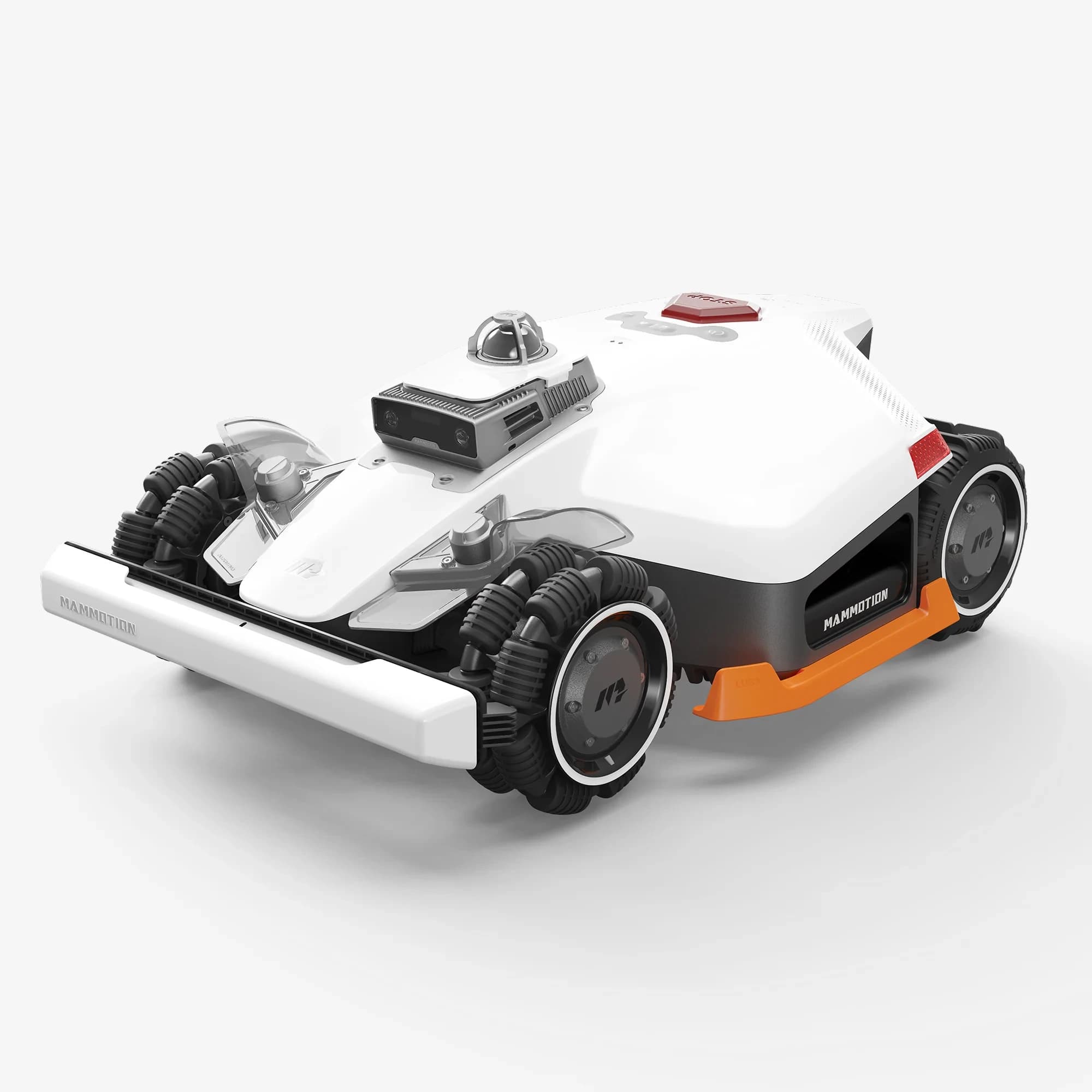
Mammotion LUBA 3 AWD 5000
All-wheel-drive flagship for 80% slopes and 5,000 m², positioned by 360° LiDAR, network RTK and two cameras together, with no reference antenna to site.
What the makers publish
- LUBA 3 AWD 5000 and LUBA mini 2 AWD 1000: 80%, all-wheel drive
- Dreame A3 AWD 1000 and A3 AWD Pro 3500: 80%, all-wheel drive
- Navimow i210 LiDAR Pro: 55% on three driven wheels
- Navimow i205 AWD: 45%, three driven wheels
- YUKA mini 2 and Anthbot Genie 3000: 45%, two-wheel drive
- eufy E15: 40%, two-wheel drive
Two machines with the same 80% on paper are not the same machine on a hill, and a slope figure alone does not make a ranking. Our best for slopes list weighs terrain above everything else, reads the drive type alongside the gradient, and prints its weights beside the order it produces. The all-wheel-drive ranking keeps to the mowers that drive all their wheels.
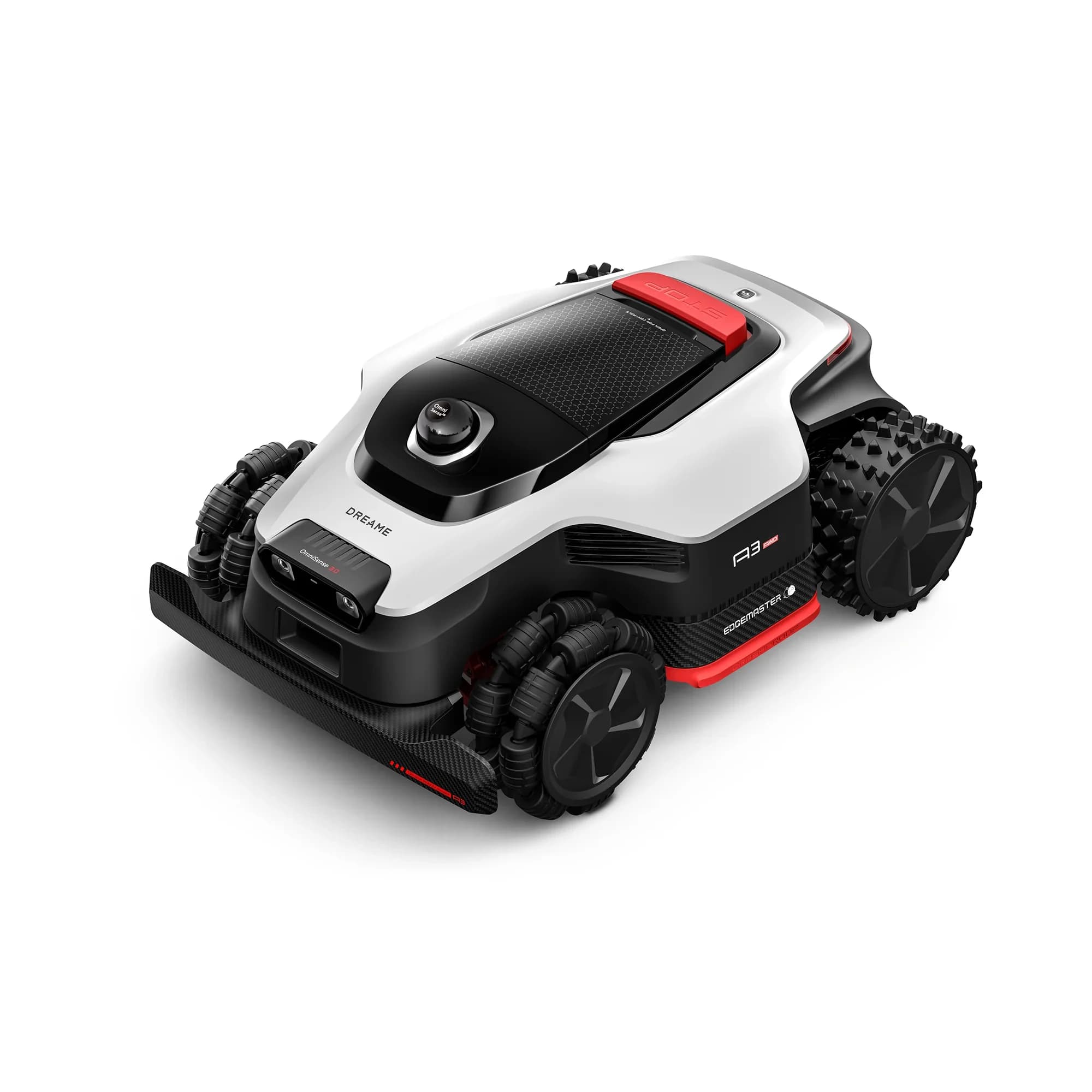
Dreame A3 AWD 1000
Dreame's all-wheel-drive mower for 1,000 m²: 360° LiDAR and two cameras instead of RTK or wire, 80% slopes, a 20 cm cut to within 5 cm of an edge, 4G tracking and a three-year warranty.
Where the rating stops
Three things the percentage does not cover. Wet grass: every figure is for a dry lawn, and a bank that is fine in July can defeat the same machine in a wet October. Terraces: a rating describes a continuous gradient, not a step, and a retaining wall of any height is a boundary, not a slope. The approach: a mower has to get onto the bank as well as up it, and a sharp transition from flat lawn to slope is where wheels slip first.
Positioning matters on a bank too. A slope under trees defeats a satellite-only machine before the gradient does; which positioning system suits which garden is its own article.
How to choose
Measure the steepest passage the mower will have to cross, not the average. A spirit-level app on a phone laid on the grass gives degrees; the short table for percent is 15 degrees is 27%, 20 is 36%, 25 is 47%, 30 is 58%. Then leave a margin. A lawn that measures 40% wants a machine rated 55% or more, not one rated 45%: the rating is a ceiling on a good day, not a working figure.
The Robot Finder asks for the slope and returns only machines rated for it. The slopes ranking orders every mower we cover by how it handles terrain.
A note on what these numbers are
Every figure in this article is the manufacturer's own published specification, cited on the product page it links to and scored by arithmetic we publish: see how we score. Nothing here comes from a test we ran, and where a maker publishes no figure our tables say so rather than guess.