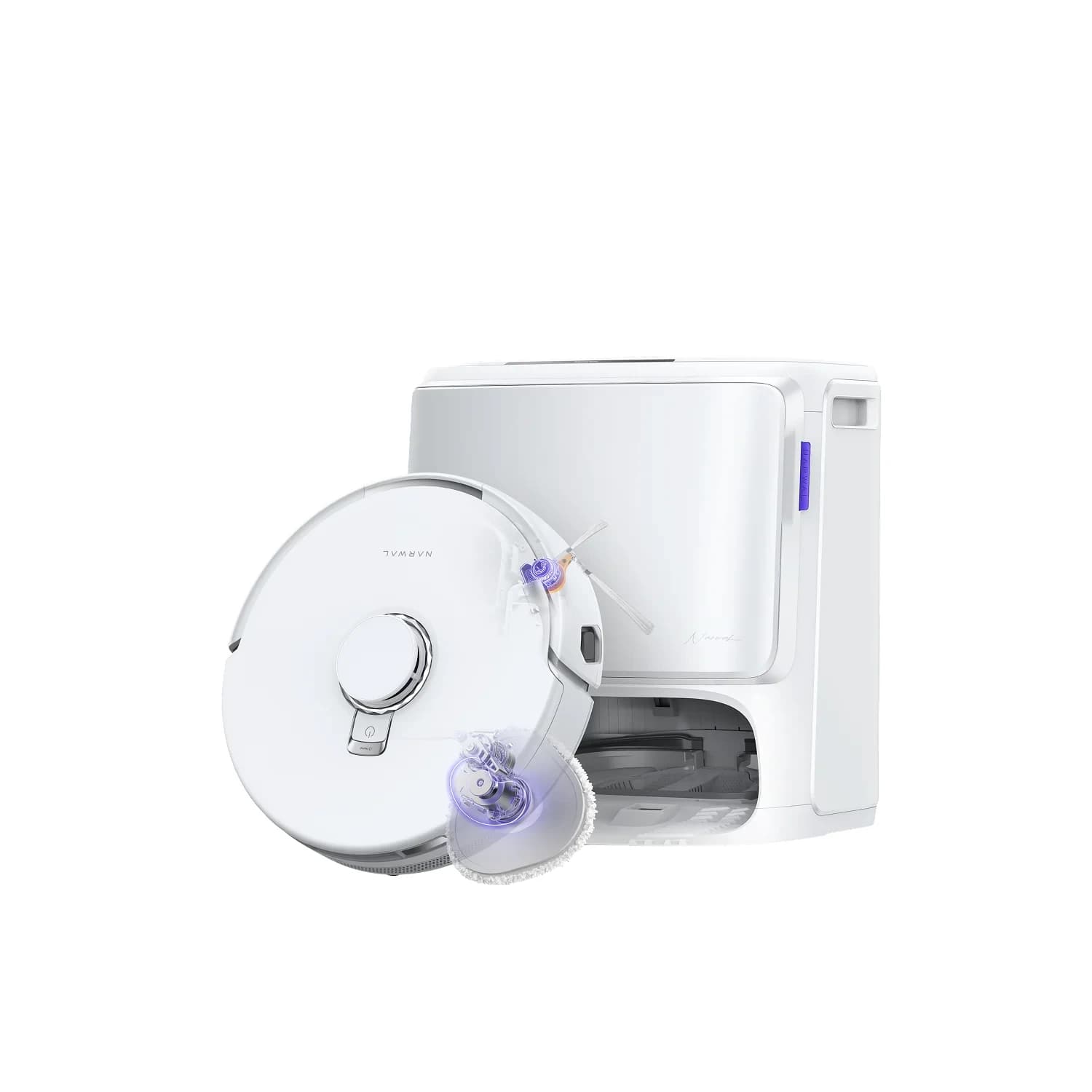
Narwal Freo Z10 Turbo review
Narwal's mid-range robot for the American shop: 25,000 Pa, twin spinning mops that reach edges and lift 12 mm, LiDAR mapping with 100 object types, and a dock that washes, dries and empties.
Shop links are affiliate links: a purchase through them may earn RoboVerdict a commission, which never changes a ranking.
Review method: Specification analysis
Our verdict
The Freo Z10 Turbo is the Freo Z10 Ultra's cheaper sibling for the American market, and Narwal's page keeps to headlines: 25,000 Pa through an anti-tangling roller brush, dual spinning mops that swing out to edges on EdgeReach arms and lift 12 mm over rugs while the suction boosts, LiDAR mapping, and obstacle avoidance for more than 100 object types, sensor unnamed. The dock washes the mops, dries them and empties the bin, deciding its own washing and drying cycles, but Narwal claims no water refilling, hot water or detergent for it. The robot weighs 4.5 kg at 108 mm tall, so it will not clear the lowest furniture, and the hidden specification table gives a 5,200 mAh battery but no runtime, bin, tank, threshold, noise or warranty term. It is the cheaper way into a full washing dock from Narwal's American shop; the Ultra adds tank refilling and hot water.
Pros
- 25,000 Pa with an anti-tangle roller
- Mops reach edges and lift 12 mm with carpet boost
- Dock washes, dries and empties itself
- 100 object types recognised
Cons
- No refilling, hot water or detergent claimed for the dock
- 108 mm tall
- No runtime, bin, threshold, noise or warranty term published
Best for
- American homes with rugs and clutter on a mid budget
- Narwal fans who want the dock without the Ultra price
Not recommended for
- Low furniture
- Buyers who need automatic water refilling
Score breakdown
- Cleaning
- 93 /100
- Navigation
- 73 /100
- Mopping
- 86 /100
- Obstacle Avoidance
- 70 /100
- Automation
- 74 /100
- Ease of Use
- 82 /100
- Reliability
- 66 /100
- Value
- 61 /100
In detail
Suction and brushes
The manufacturer rates the suction at 25,000 Pa. That is about the middle of the field. The main brush is the tangle-resistant type, with one side brush. On carpet the suction rises automatically.
Mopping
Mop system: twin spinning pads. It lifts the mop 12 mm over carpet. The mop swings out to reach along walls.
Navigation and obstacles
It navigates by LiDAR and avoids obstacles with single-camera AI. No-go zones can be drawn in the app.
The dock
The dock empties the bin and washes and dries the mop.
Battery, charging and noise
The manufacturer publishes neither a runtime nor a noise figure.
Video reviews
Public YouTube reviews by other authors, picked automatically by title and views and refreshed every few days. They do not feed the Verdict Score.
Specifications
Cleaning
- Suction
- 25,000 Pa
- Brush system
- Tangle-resistant
- Side brushes
- 1
- Carpet boost
- Yes
- Dustbin
- Not published
Navigation
- Mapping
- LiDAR
- Obstacle avoidance
- Single-camera AI
- Saved floor plans
- Not published
- Threshold climb
- Not published
Mopping
- Mop type
- Twin spinning pads
- Mop lift
- 12 mm
- Extending mop
- Yes
- Water tank
- Not published
Dock
- Self-emptying
- Yes
- Mop washing
- Yes
- Mop wash temperature
- Not published
- Mop drying
- Yes
- Water refill
- No
- Plumbed drain
- No
- Dust bag interval
- Not published
- Adaptive dock
- Washing and drying set by the dock's own AI
Software
- No-go zones
- Yes
- Pet waste recognition
- No
Power
- Battery
- 5,200 mAh
- Runtime
- Not published
- Charging time
- Not published
Connectivity
- Wi-Fi
- Yes
- Bluetooth
- No
- 4G / LTE
- No
- Voice control
- No
Physical
- Weight
- 4.5 kg
- L × W × H
- 355 × 350 × 108 mm
- Noise
- Not published
Support
- Warranty
- Not published
- Released
- Not published
Obstacles
- Recognised object types
- 100+
Fit
- Dock size and weight
- 431 × 403 × 461 mm, 10.6 kg
Data source: Narwal US product page and hidden Specifications section, retrieved September 10, 2026
Where to buy
Prices are read every night from the manufacturers' shops that list the machine, and shown as read. A price no read has confirmed for several days is marked with the day it was last seen. Where a week or more of readings exists, the lowest we recorded in the last 30 days is stated as well. RoboVerdict may earn a commission when you buy through links on our site. This does not affect our rankings. As an Amazon Associate I earn from qualifying purchases.
Top picks
- Dreame87
Dreame X50 Master
The X50 Ultra robot on a plumbed 249 mm dock: 20,000 Pa, legs for a 4.2 cm sill, a LiDAR that retracts to 89 mm, an 80 °C wash, 220 minutes a charge and a 3-year warranty.
- Narwal78
Narwal Freo X10 Pro
Narwal's entry-level robot with a full dock: 11,000 Pa, LiDAR navigation, twin mops that reach into corners, a dock that empties, washes and dries for 120 days, and anti-tangle brushes.
- Dreame79
Dreame L40 Ultra Gen 2
The second L40 Ultra: 25,000 Pa, a TriCut hair-cutting brush, mops that extend 4 cm and lift 10.5 mm, LiDAR, four maps, and a dock that empties, washes, hot-air dries and doses detergent.